
Our Favourite Gravel Routes in Estonia: 68 km Along the Old Railway to Virtsu
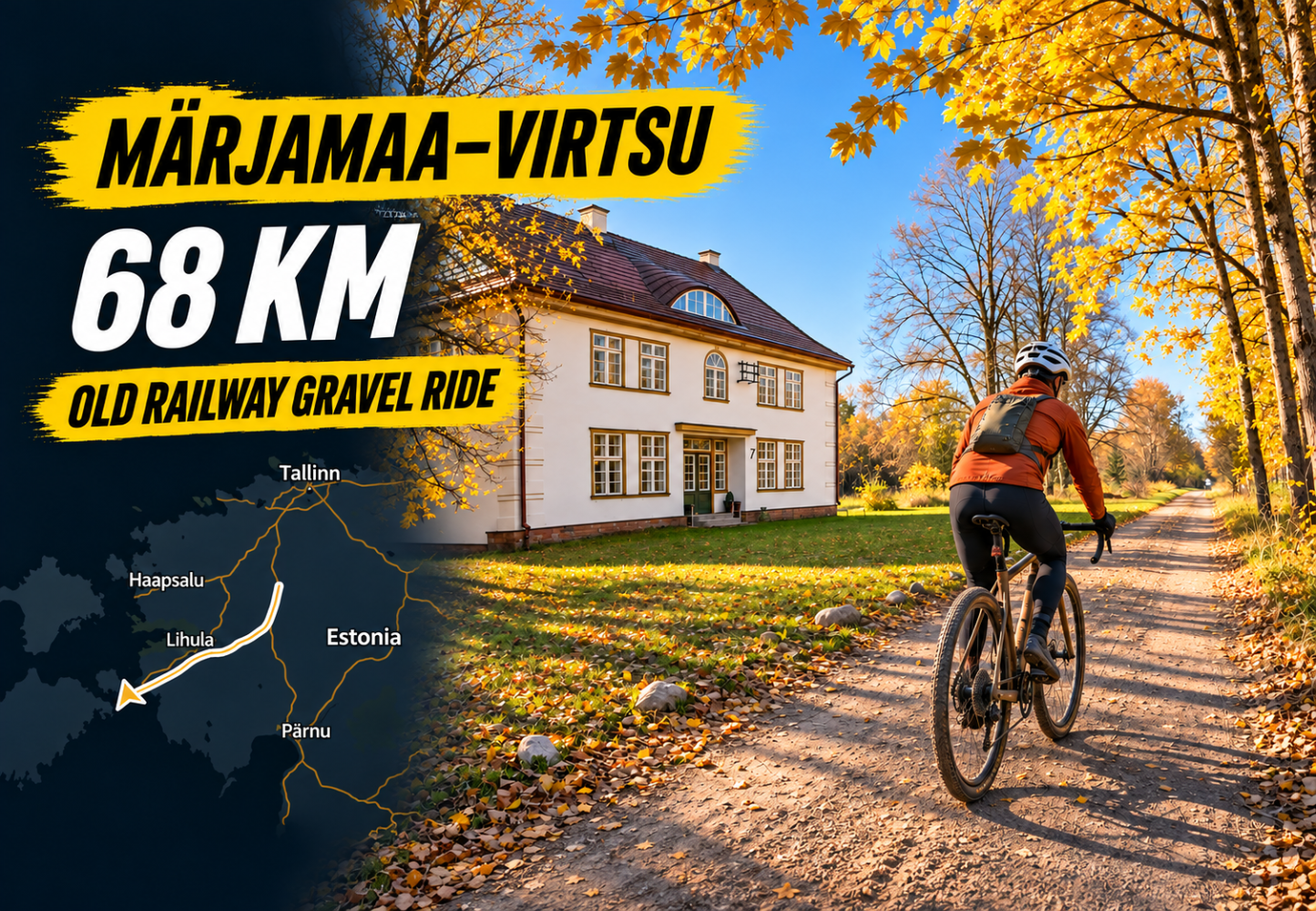
We’re continuing to share our favourite gravel routes in Estonia—and this time, we’re following an old railway from Märjamaa to Virtsu. Expect peaceful countryside, former stations and long stretches of gravel, with plenty of reasons to stop along the way.
You can ride this route in either direction:
- Towards the islands: start in Märjamaa and ride to Virtsu, where you can catch the ferry to Muhu and continue across the causeway to Saaremaa. To begin your journey from Tallinn, take the train to Turba and follow our 35 km Turba–Märjamaa gravel route. Stay overnight in Märjamaa (or in another place along the route – options are listed below) and continue towards Virtsu.
- Returning from the islands: take the ferry from Muhu to Virtsu, then ride this route to Märjamaa. From there, follow our Turba–Märjamaa route in reverse for 35 km to Turba railway station, where you can catch a direct train to Tallinn.
The ride at a glance
68 km
Märjamaa ↔ Virtsu
Gravel bikes & hardtail MTBs
October 2026
Mostly gravel, with some grassy and muddy stretches. Very little motor traffic encountered during our scouting ride.
Explore the route
Follow the 68 km journey from Märjamaa to Virtsu on the interactive map below.
From railway line to gravel route
The Märjamaa–Virtsu section once formed part of the 96 km Rapla–Virtsu narrow-gauge railway. Construction began in 1928, and the line opened on 1 December 1931, connecting western Estonia and Virtsu harbour with the wider railway network. It also became an important link for islanders travelling between Saaremaa and the mainland.
The last passenger train ran in May 1968. As road transport expanded, the line was considered uneconomical to operate. Plans to rebuild it as a broad-gauge railway never materialised because of a lack of funding. Today, stretches of its former embankment offer a very different journey—one best enjoyed on two wheels.
Railway history:
RMK
and
Virtsu local history archive.
Riding from Märjamaa
We tested this route on a crisp, sunny day in October 2026. From Märjamaa, follow Jaama Street, then Uus Street, which leads to Raudteetammi tee. The names fit the journey nicely: “Station Street”, “New Street” and “Railway Embankment Road”.
“Continue straight for 20 kilometres.”
Our navigation wasn’t joking. Luckily, straight doesn’t have to mean boring.
Would a route with so few turns keep us interested? As it turned out, absolutely. The quiet surroundings, changing vegetation and traces of railway history gave us plenty to enjoy, even when the road ahead seemed to stretch on forever.
Surfaces and riding conditions
Some sections offer excellent, smooth gravel. Others were a little muddy where forestry vehicles had been using the track, but we encountered nothing too difficult during our ride. There are also grassy stretches where nature seems ready to reclaim the old railway. A few more passing cyclists certainly wouldn’t hurt!
A gravel bike or hardtail mountain bike is a good choice. Expect varied surfaces rather than a consistently smooth trail, particularly after wet weather.
Navigation is generally straightforward, with signs along the route. Information boards explain the history of the narrow-gauge railway and its former stations—well worth a pause between kilometres.
Traffic
We encountered very little motor traffic. Some stretches are shared with cars, while much of the former railway route is closed to motorised traffic. Follow the signs and stay alert where the trail joins or crosses roads.
Stops and sights along the way
Distances are approximate and measured from Märjamaa along the main route. Optional detours add extra kilometres.
KM 12.5
Põrgupõhja Forest Brothers’ Bunker
Hidden in the forest, this reconstructed bunker offers a glimpse into the lives of the Forest Brothers—Estonian resistance fighters who opposed Soviet occupation after the Second World War.
Opened in 2015, the reconstruction stands beside the original bunker site and a memorial to the fallen. Look for a small sign beside the route and follow the path approximately 60 metres into the forest.
The site is free to visit.
AROUND KM 17.5
Former Vigala Station & Vana-Vigala Manor
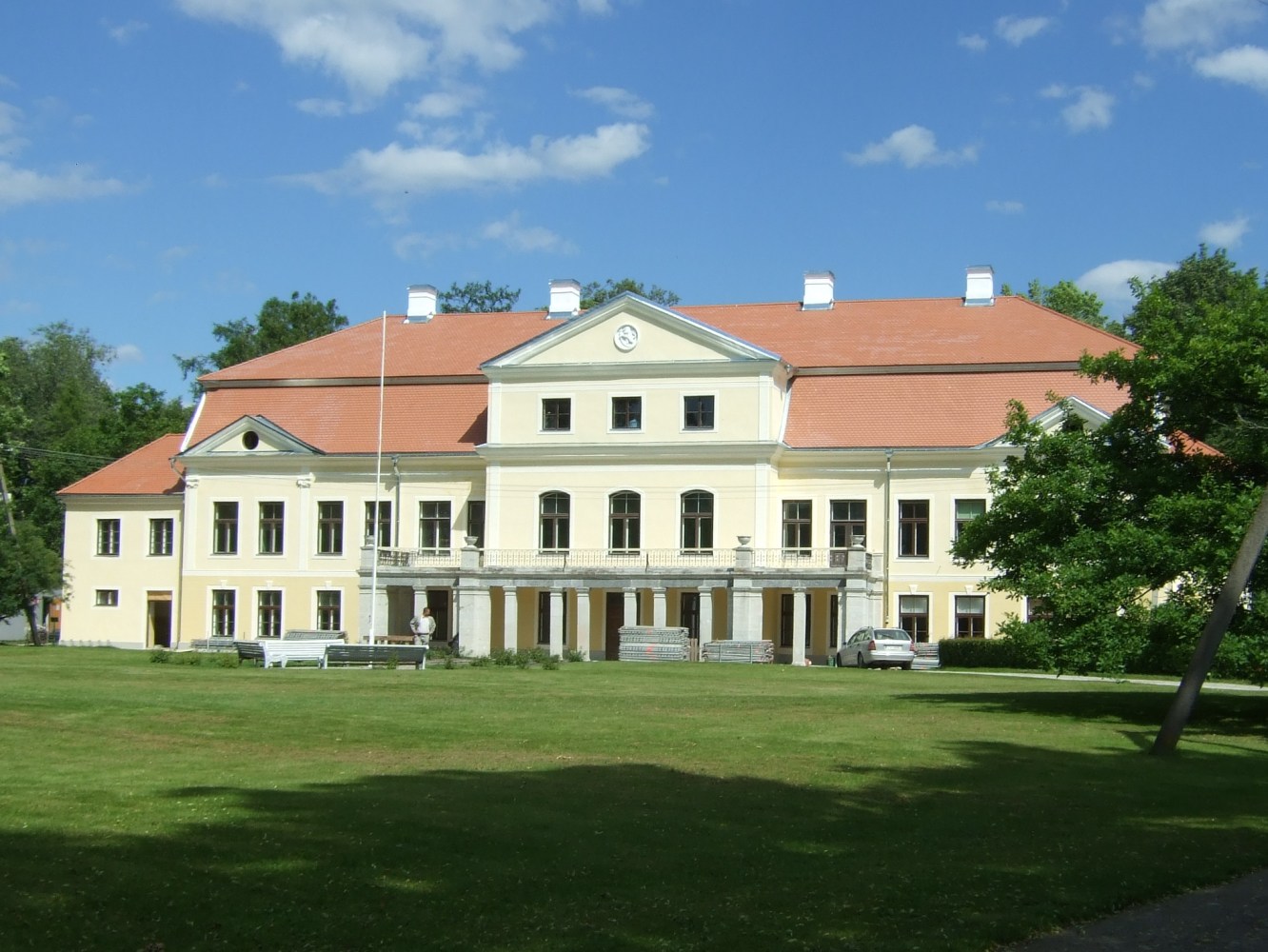
Photo: Malenki / Wikimedia Commons,CC BY-SA 3.0 EE.

Look out for the former Vigala Railway Station, which now houses Vana-Vigala Community Centre. It’s a lovely example
of an old station finding a new role in village life.
From here, a detour of approximately 1.5 km to the right takes you to Vana-Vigala Manor. This elegant 18th-century manor house is surrounded by a historic park—a pleasant place to stretch your legs and take a break.
The nearby Coop grocery store is handy for stocking up on snacks and drinks. Returning the same way adds approximately 3 km to your ride.
KM 44
Lihula — Coffee Break & Manor Museum
With around 24 km remaining to Virtsu, the small, welcoming town of Lihula makes a good stop for coffee and a rest.
Visit Lihula Manor, whose 19th-century main building houses a museum exploring local history and traditional crafts, including the region’s distinctive floral embroidery. The museum is open from May to September, with off-season visits available by prior arrangement.
KM 55.5
Former Karuse Railway Station
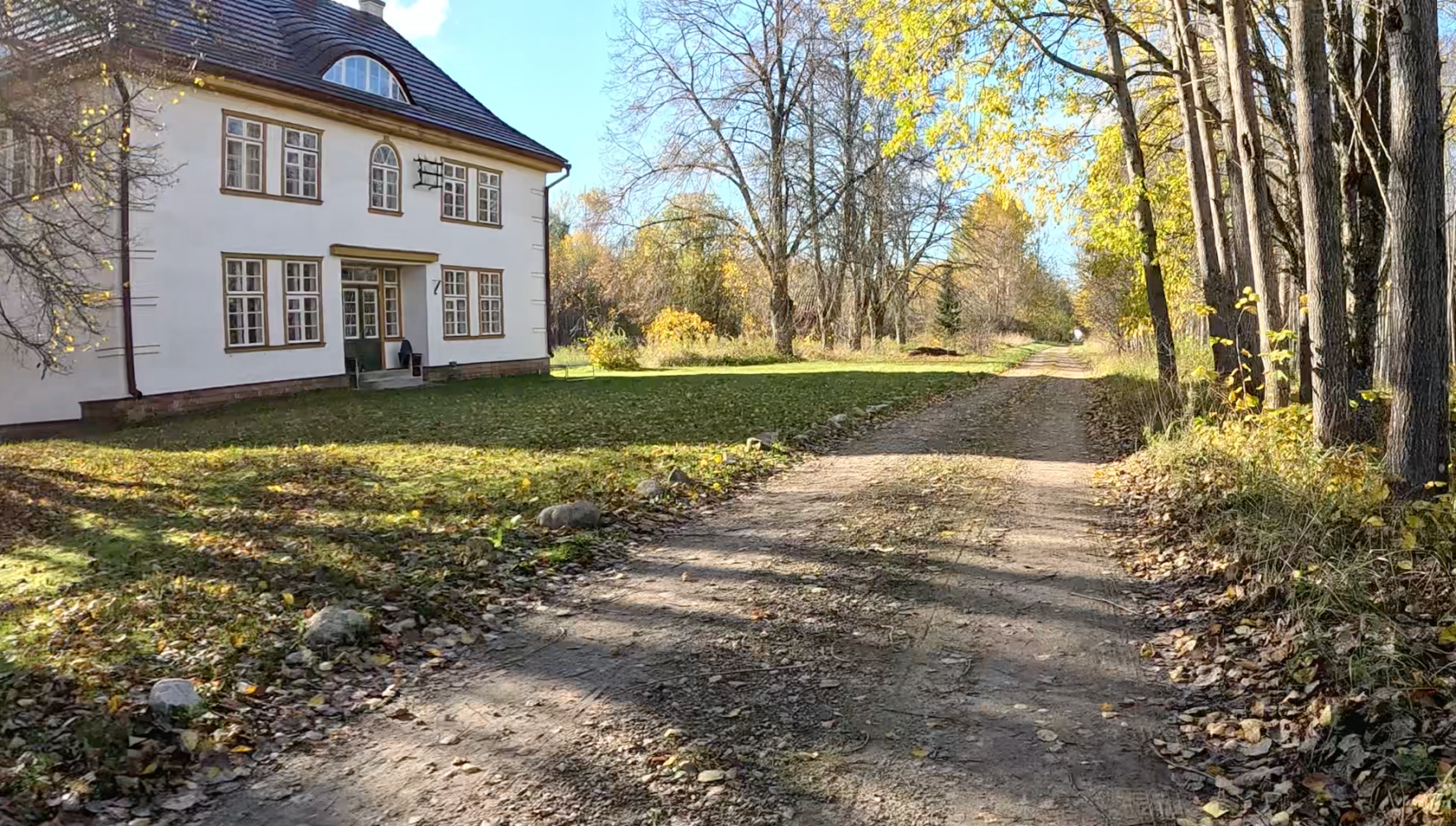
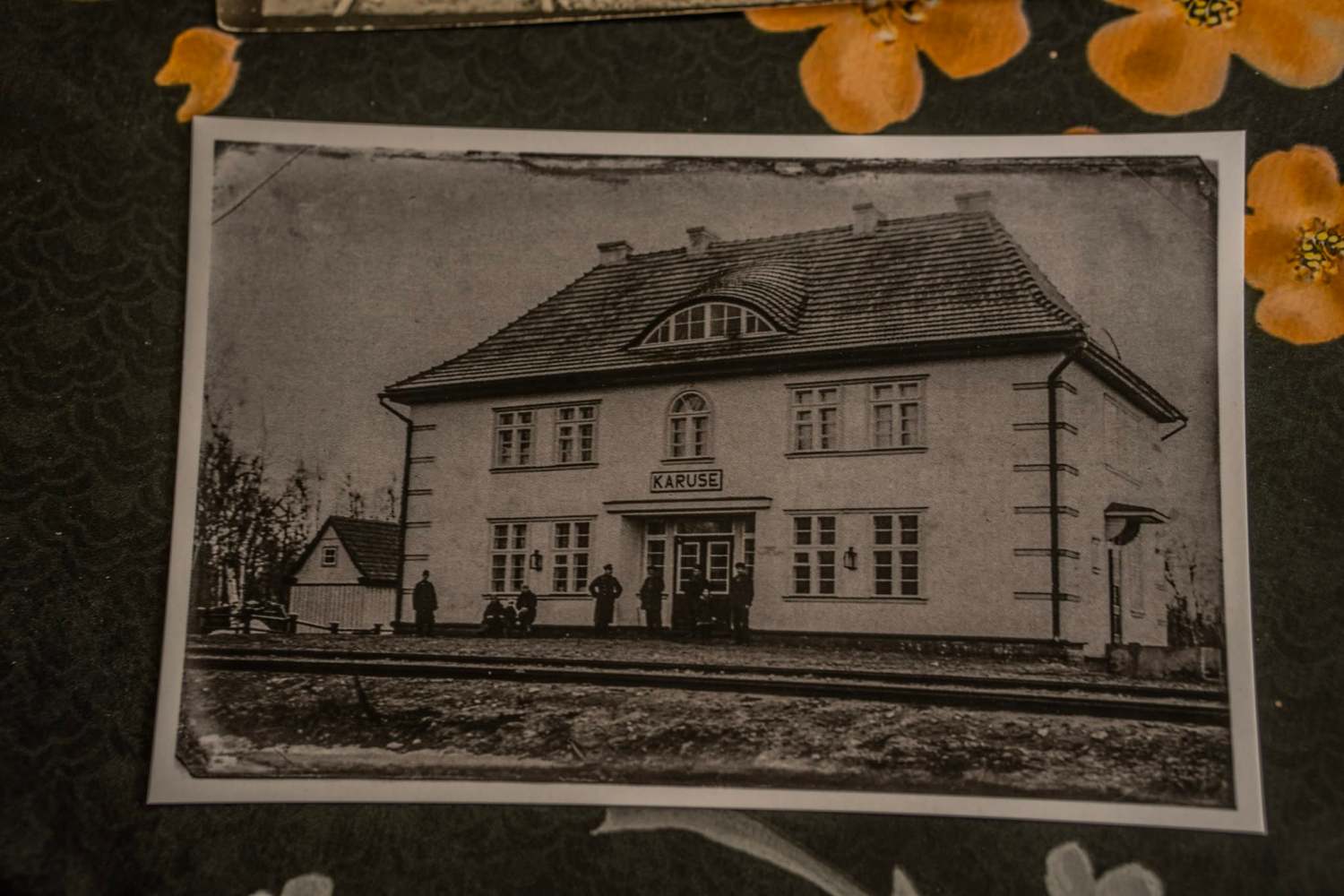
Photo: Latvian Greenways Association / Facebook.
Keep an eye out for the former stations along the route, including
Vigala, Lihula, Tuudi and Karuse. Their buildings are reminders of the passengers and goods that once travelled this way.
Some, like Karuse, have been converted into private homes. Please admire them from the road and respect the residents’ privacy.
KM 68
Virtsu Harbour — Finish or Continue to the Islands
Virtsu marks the end of this route, but it could be the beginning of an island adventure. Catch the ferry to Muhu, then ride
onwards to Saaremaa.
Shops, a café, public toilets and an ATM in the harbour area make this a practical place to take a break and prepare for the next stage.
Where to stay
Combining this ride with the Turba–Märjamaa route or continuing to the islands? Here are a few options for breaking up your journey.
Märjamaa
Märjamaa Hostel & Pub sits opposite the church in
the town centre. Stay overnight, enjoy a meal at the pub, or stop for
the weekday buffet breakfast, served from 06:30 to 12:00.
Breakfast is also available to non-residents.
Vana-Vigala
Hirvepark Hostel offers accommodation for an overnight
stop along the route.
Lihula
Lihula Hostel offers rooms and apartment-style
accommodation for larger groups.
Virtsu
Local B&Bs and guesthouses offer options for resting before or after the ferry crossing. Check availability ahead of your trip.
Make it a longer adventure
Start with a train ride from Tallinn to Turba, follow our 35 km gravel route to Märjamaa, then continue along the old railway to Virtsu. From there, the islands await.
Explore more former railway routes
Enjoy riding old railway tracks? The Green Railways initiative introduces former railway corridors that have found a new life as walking and cycling routes in Estonia and Latvia.